

Better marketing did not require a bigger budget.
When 312 Truck first approached me, one of the first conversations we had was about what they were trying to accomplish and what they were already spending to get there.
My reaction was pretty simple.
I thought the budget was overkill.
They were investing heavily in marketing, but spending more money is not automatically the same thing as having a better strategy. I believed we could reduce some of that spend, improve the digital marketing underneath it, strengthen organic search, take AI search seriously and ultimately create better results with a more disciplined approach.
So that is what we set out to do.
312 Truck operates in a pretty specific world. They are not trying to generate random website traffic. They need commercial trucks in the shop. Fleet operators, box trucks, medium duty vehicles and businesses responsible for keeping those vehicles working are the audience.
That changed the way we evaluated almost everything.
A click only had value if it came from the right type of customer. A phone call was more useful if it came from someone in the service area with an actual commercial vehicle. A keyword ranking was more interesting if it connected directly to the kinds of work the shop wanted to perform.
We started tightening the digital strategy around that idea, and one of the biggest opportunities was search. Not just traditional SEO, but AEO too.
Search behavior is changing. People still use Google, but they are also asking ChatGPT and other AI tools the same kinds of questions they used to type into a search box.
Who repairs commercial trucks in Chicago? Where can I get a fleet of trucks painted? Who handles box truck collision repair? Which company can take on a large fleet project?
If those answers are increasingly being generated by AI, I want to know whether 312 is showing up in the conversation.
So we started tracking it.
We built competitive AEO monitoring around the real questions fleet operators and commercial vehicle owners might ask and began measuring how 312 appeared against its competitors. Instead of treating AI search as something to worry about later, we started building for it now.
And so far, 312 is leading the pack.
At the same time, we strengthened the traditional SEO foundation underneath it. We moved beyond broad truck repair phrases and started building around the way real customers search: commercial truck body repair in Chicago, fleet truck painting, box truck repair, collision work, corrosion prevention and highway based searches around the major routes commercial trucks use every day.
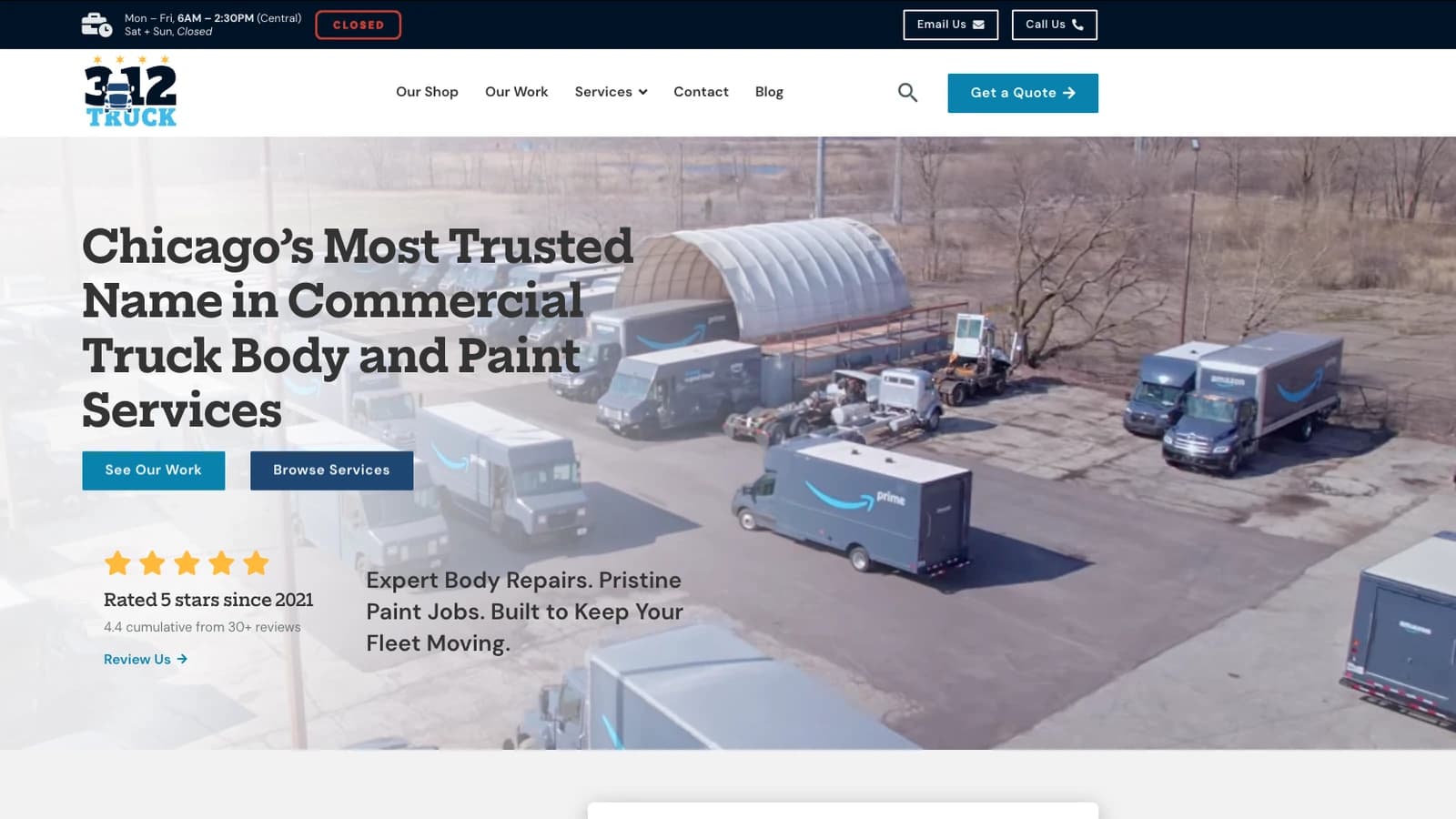
The website and content started supporting those searches much more deliberately, and rankings followed.
We looked at the paid side of the business with the same discipline. Google Ads, display advertising, retargeting and audience strategy all needed to connect to actual business outcomes, not just platform metrics.
Call tracking became part of that too. We could look beyond how many calls a source generated and start evaluating the quality of those calls. Were they in the service territory? Did they have the right type of vehicle? Did the conversation have the potential to become real work?
That kind of analysis helped us make better decisions about where money should stay and where it should not.
The strategy expanded beyond search as we learned more about the customer.
We built geo targeted campaigns around places where commercial trucks actually spend time: logistics hubs, industrial parks, distribution centers, intermodal areas and truck heavy corridors.
Email became another part of the system, using both existing customer relationships and new targeted audience data to keep 312 in front of fleet operators and commercial vehicle businesses.
AEO is still developing quickly, and nobody has a magic button that guarantees an AI platform will recommend a business. But we can build a clearer digital footprint, create content around real customer questions, strengthen traditional search authority and measure whether those efforts are carrying into AI generated answers.
All of these pieces started working together: search, paid media, email, website content, call tracking, geo targeting and AEO.
And the business result is the part I care about most.
That is a much better marketing metric than impressions.
It also reinforces something I have believed for a long time. A larger marketing budget is not automatically a competitive advantage. Sometimes the better decision is to spend less, understand the customer more deeply and make each part of the system work harder.
That is what happened with 312.
We reduced waste, tightened the strategy, improved search visibility, started building for the next generation of search and created a much clearer way to understand what was actually generating business.
Related stories + insights

RK Digital Transformation Earns OpenAI Select Partner Status
RK Digital Transformation has earned OpenAI Select Partner status, strengthening its ability to help clients plan, implement, and support practical AI solutions alongside websites, search, and advertising.

The smartest marketing move was knowing what not to spend money on.
RK used coordinated social media, email, and paid media to fill the calendar with affordable, qualified leads and help Turner Concrete grow with confidence.
Why More Traffic Is Not Always the Right Marketing Goal
More website traffic is not automatically better marketing. A smaller audience of qualified prospects usually beats a larger one, so intent and real business outcomes are more useful measures than a bigger analytics number.

Ready to improve your marketing?
Let's find out what's working, and what's getting in the way.
The RK Marketing Checkup gives you a clearer view of your website, search visibility, paid campaigns, social presence, and overall marketing system.