

Helping a local furniture store tell a better product story.
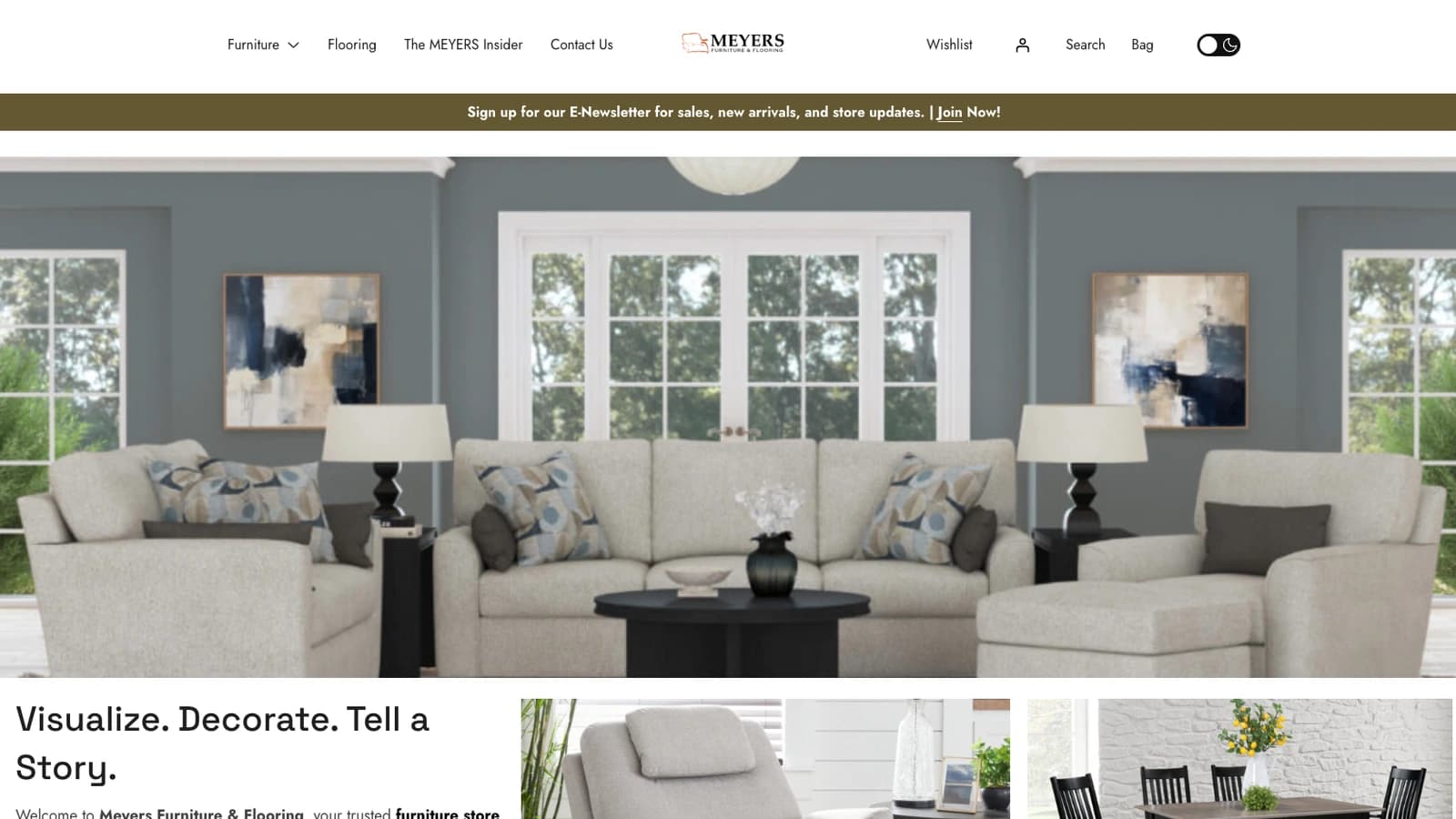
Helping a local furniture store tell a better product story.
I’ve worked with Meyers Furniture for nearly 30 years now, and somewhere along the way they stopped feeling like clients and simply became family.
I’ve watched parents become grandparents and grandparents become great grandparents. I’ve watched our kids bounce around the showroom together as toddlers. I’ve watched the business change, the industry change, and the way we all market and shop for furniture change right along with it.
That history shapes the way I think about their marketing today. I know the people behind the business. I know the value of the showroom. I know the products, the customers, and the little things that make Meyers different from a national furniture chain.
So when I look at their marketing, I’m not just looking at another retail account.
I’m looking at a business and a family I’ve grown up alongside.
Furniture marketing can get repetitive pretty quickly.
Sale. Clearance. Fifty percent off. Free delivery. Limited time.
Retail needs promotions, and Meyers absolutely uses them. But if every message is built around price, eventually the products themselves become interchangeable. A sofa is just another sofa. A dining table is just another dining table. The marketing starts sounding the same as everyone else.
Working with Meyers Furniture gave us an opportunity to approach that differently.
Meyers is the kind of business where the showroom still has real value. People can walk in, sit on the furniture, open drawers, feel the materials, compare construction, ask questions and talk to people who actually know what they are selling. That experience is hard to replicate online, so the digital strategy needed to give people a reason to make the trip.
That changed the way we started looking at products.
Instead of treating every item as an isolated piece, we began using individual products as entry points into larger stories. An Amish glider could introduce the craftsmanship and customization available throughout Meyers’ Amish furniture collection. A Flexsteel sofa could open a conversation about construction, comfort and durability. A mattress post could become part of a broader conversation about sleep rather than another price graphic.
That shift sounds simple, but it changes the marketing quite a bit.
How is it made? What can be customized? Who is it a good fit for? Why might someone choose it over something they saw online from a national retailer? What makes it worth driving to the showroom to see in person?
Those questions started influencing the website, social content, paid advertising and the way individual products were presented online.
The Amish furniture category became a particularly good example.
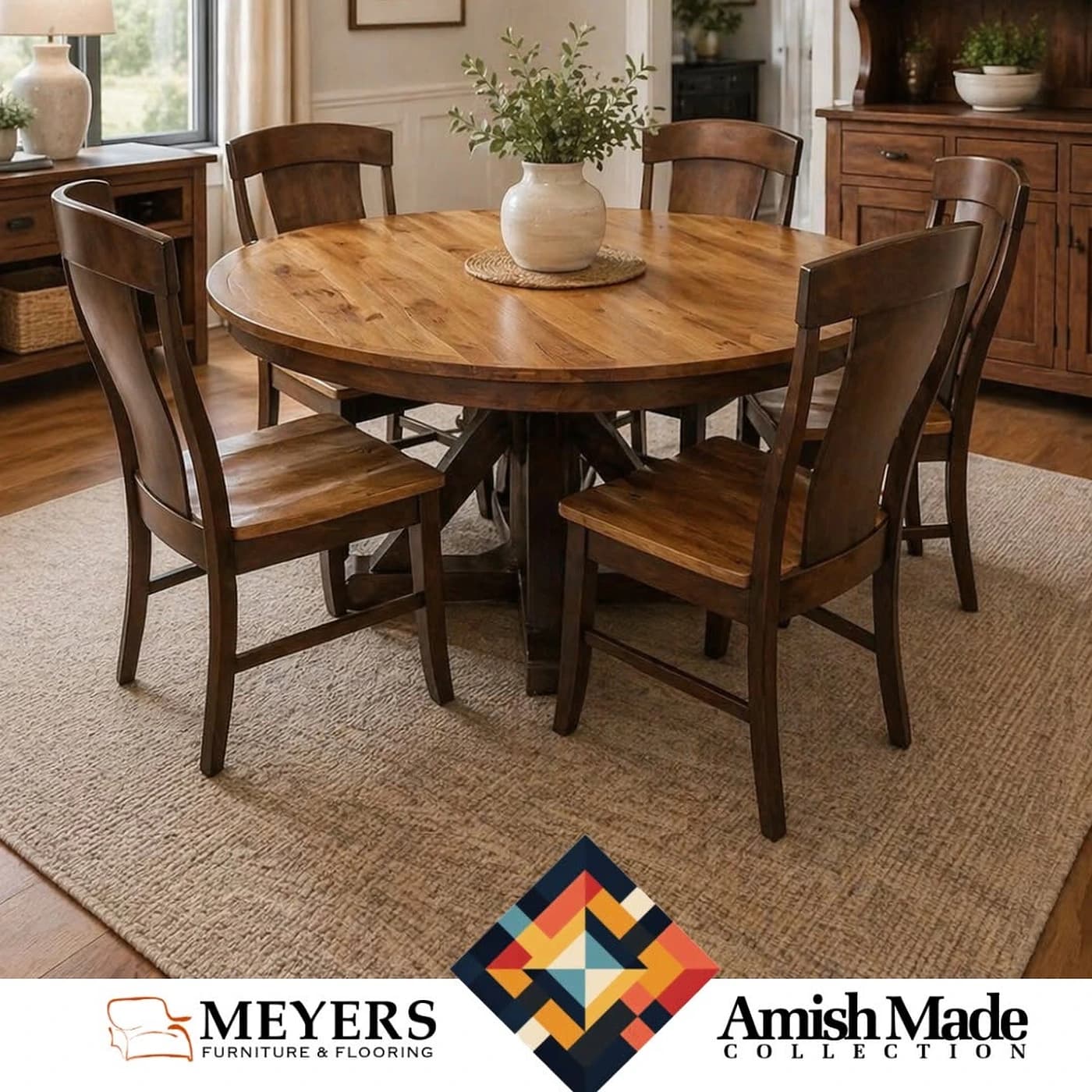
Meyers carries a broad selection of Amish made furniture, but one photograph can easily make it look like you’re simply advertising that one table, chair or glider. We started being much more intentional about using featured pieces as representatives of the larger collection.
The real story is the selection, craftsmanship and ability to find something that feels less mass produced.
The same thinking carried into paid media.
For mobile advertising especially, we learned quickly that less is usually better. One strong product image, a clear message and a simple reason to visit can outperform creative packed with category lists, icons, sale details and tiny text nobody can read on a phone.
That philosophy also fits the way we approach digital advertising on other RK projects. The ad should do enough to earn attention and create interest. It does not need to explain the entire business in one graphic.
The website has a different role.
That is where we can provide more depth, organize products by category, strengthen local search visibility and help customers understand the broader selection available at each store. For a business like Meyers, website strategy and development is not about replacing the showroom experience. It is about making the showroom easier to discover and giving people a reason to visit it.
Local search works the same way.
Someone searching for furniture in Northern Illinois is usually not looking for abstract inspiration. They are looking for somewhere they can actually shop. Strong local content helps connect those searches to a real store with real inventory and people nearby who can help.
Meyers also reminded me of something that gets lost in a lot of digital marketing conversations.
Sometimes the best digital strategy is one that supports what the business already does exceptionally well.
For Meyers, that means helping people discover the store, understand the quality and variety available, and decide that the drive is worth making.
The website, advertising and social media all have a role in that.
But eventually, the best part of the customer experience happens when someone walks through the door and sits down.
Related stories + insights
Vantage Credit Union Advisors
Building a brand around clarity, purpose and the member.
COROCO Wholesale
Turning COROCO’s wholesale business into a better digital experience.
What Makes a Website Page Convert?
A website page has to help the right person find the business and give them the confidence to take the next step. Clear language, honest trust signals, a simple structure and an obvious next step do more than clever copy.

Ready to improve your marketing?
Let's find out what's working, and what's getting in the way.
The RK Marketing Checkup gives you a clearer view of your website, search visibility, paid campaigns, social presence, and overall marketing system.